
- Current Location:Home > Hardware > Did Democrats bet on the wrong horse for their political future?
Guest Post
Did Democrats bet on the wrong horse for their political future?
Date:2026-06-18 14:30:32
- [Software] Source:XHS Tech Times
 来源:Washington Examiner · 作者:Terence O’Neill · · 分类:US Politics
Leaving no daylight between them, the Clintons have projected themselves to the public as a team, responsible for each other’s actions and successes. However, in doing so, it has not given the electorate much of a chance to discern between the successful domestic presidency of Bill Clinton, while accepting that Hillary Clinton was just not on the same skill level as her husband in terms of electoral politics. Nor does the personal baggage that seems to follow them around like a shadow help their cause.
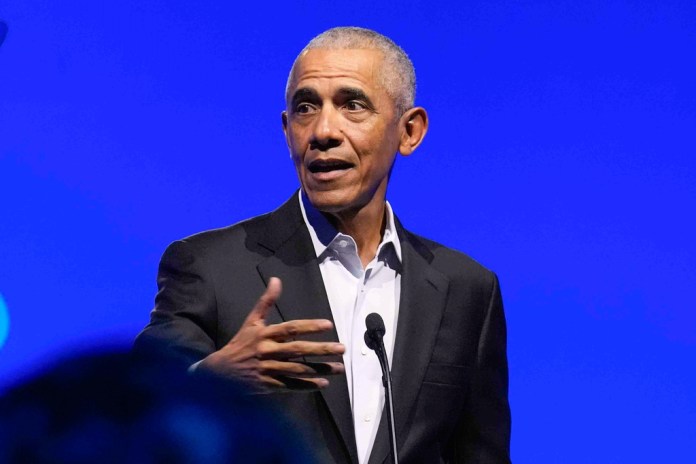
Viewed through the lens that Hillary Clinton was handed two of the biggest political layups in modern electoral history in 2008 and 2016, only to come up short both times, it caused Democrats to look elsewhere for their standard-bearer. The Democratic faithful have instead gravitated toward Barack Obama as their president-emeritus.
But has this been a wise choice, as well as being a true statement in terms of electoral realities? Let’s take a look at the hard data:
KAMALA HARRIS SAYS SHE ‘ABSOLUTELY’ WOULDN’T HAVE STARTED IRAN WAR
In 1992, Bill Clinton became the president-elect with 370 electoral votes, winning 32 states, versus Obama’s 365 electoral votes and 28 states in 2008. Now, it is true that in 1992 there was a legitimate three-way race for the presidency, with Ross Perot running as an independent with a populist message, as Clinton garnered only 43% of the popular vote. However, in that year, Bill Clinton was running against an incumbent president who had won 40 states only four years prior and who had peaked in approval ratings during the 1991 Gulf War.
Obama, on the other hand, was running in an open presidential election year when the incumbent president was at historic lows in approval ratings and the country was beset with a once-in-a-century financial crisis as the election season unfolded. The 2008 election should rightly be viewed as a rebuke of the current party in power rather than any momentous shift in American politics, say, like 1932, 1980, or even perhaps 2016 (more on that later). Had Hillary Clinton somehow managed to win the Democratic nomination in 2008, it is more than likely that she too would have cruised to victory in the general election.
Now, looking at their second presidential elections, Bill Clinton expanded his margins, finishing with more electoral votes (379) and gaining 2.5 million more raw votes.
In contrast, Obama won in 2012 with fewer electoral votes, fewer states won, and fewer raw total votes. In 2012, he won 26 states, 332 electoral votes, and received roughly 3.5 million fewer votes. In receiving fewer votes during a winning effort in 2012, Obama holds the dubious distinction of being the only president in American political history to do so for anyone who has won a second term.
To give some historical context, in 1984, Ronald Reagan won in more of a landslide than his 44-state win during his first presidential election in 1980. Reagan expanded his margin in the popular vote, 51% in his first effort versus almost 59% in his second. He picked up five more states, accumulating the most electoral votes of all time in an election at 525, and gained nearly 10.5 million more votes than his 1980 win.
Heck, even George W. Bush, who won by a whopping 537 total raw votes the first time around, was able to expand on his raw vote totals in 2004.
With the benefit of hindsight, one could derive from these election results that 2012 was, in fact, a pyrrhic victory for Democrats, setting the table for a trend that continued into 2016 and beyond.
The inflection points for both Clinton and Obama came in their first midterm elections, where each president suffered heavy congressional losses. This is where Clinton and Obama differ. Determined to be a successful president and earn a second term, Bill Clinton changed tacks and reached across the aisle after his 1994 midterm thrashing. He found middle ground and was rewarded for it with a larger share of the electorate than in his first election. Working with Republican majorities in both houses, Clinton was able to balance the last four budgets that he submitted. This became his swan song.
Obama, on the other hand, passed the Affordable Care Act under the cover of darkness after promising to bridge the divide between red America and blue America. That canard lasted less than one year into his first term. What people slowly realized was that he was a hyper- partisan who disdained the Republican Party with such vehemence that it became a huge blind spot for him throughout his time in office. He was unwilling or unable to accept the reality that, after 2010, it was all but a mathematical impossibility that the Democrats could ever recover the House majority during his time in office.
Furthermore, Obama’s weaknesses as a legislator shone through when he lost the supermajority. There was still an incredible opportunity for getting liberal policies implemented in his early years, including the elusive “bipartisan immigration reform” that politicians loved parroting during that period. While Scott Brown’s special election upset victory in Massachusetts in 2010 broke the Democrats’ filibuster-proof Senate majority, Democrats still held 59 Senate seats and had a comfortable House majority. Having such large majorities in both houses was unheard of in modern political times, and yet Obama could not capitalize on it.
Any other president, and especially Clinton, would have been salivating at the mouth for those types of majorities and goodwill. It showed how uniquely unqualified Obama was for that moment in a lot of people’s eyes. There was nothing in his personal history to suggest that he could effectively govern in a somewhat bipartisan manner.
While Republicans were still licking their wounds from the disastrous 2006 to 2008 years, Obama wrongly assumed that those days would last forever and didn’t plan accordingly. This caused the Democrats to lose an unfathomable 63 House seats and six Senate seats in the 2010 midterm elections, causing the largest swing since 1948. The down-ballot damage in the state houses across the country was even worse, something that Democrats have yet to recover from.
By the time Obama’s second midterm election rolled around in 2014, he was duly rewarded with another walloping. Republicans gained nine Senate seats, thus winning the Senate back for the first time since 2006. The nine Senate seats were the largest gain for either party since 1980. They also won an additional thirteen House seats, giving Republicans their largest majority since 1928.
Contrast this with Bill Clinton, who in 1998 actually had the Democrats winning five seats in Congress during his final midterm elections. He also staved off any Senate losses, all amid his infamous impeachment hearings. It was the first time since 1934 that the party in power did not lose any seats in a midterm election. Newt Gingrich, Clinton’s main foe, was so flummoxed by these results that it led him to step down from both his leadership post and Congress altogether.
Now, fast forward to the 2016 primaries, where Hillary Clinton was anointed as Obama’s chosen successor. As the election season unfolded, one could make the argument that Hillary actually ran a much more effective campaign in 2008 than she did during her second go-around.
In 2008, she had a much harder road, facing off against the likes of Obama, John Edwards, and Joe Biden. By 2016, she was damaged goods. She was forced to defend a president with unpopular policies and tried to mimic his “rising coalition,” something that did not come naturally to her, nor did these voters respond to her the same way they did to Obama.
While in 2008 she fought hard to keep the blue-collar workers in her corner that her husband had courted so well during his presidency, she all but abandoned those voters in 2016.
For example, in the West Virginia Democratic primary in 2016, Hillary Clinton stunningly lost to Sen. Bernie Sanders (I-VT) by 15 points. What made this loss so shocking was the fact that she had garnered 67% of the primary vote there in 2008, trouncing Obama and keeping her fading campaign alive at the time.
Bill Clinton, ever the natural campaigner, saw people on the stump in 2016 struggling with increased premiums from Obamacare. He went off-script and started speaking to them in a way they understood. He highlighted the fact that many people who owned their own businesses and were working 60 hours a week just to make ends meet were “getting whacked”, calling the ACA rise in premiums “the craziest thing he had ever seen.”Days later, Hillary Clinton was forced to walk back those comments in a drab manner, losing any momentum her husband might have created for her on this issue.She left no daylight between her and Obama, and it proved costly.
When the dust settled after the 2016 election, it was not a pretty picture for Democrats. Republicans had 33 governorships compared to just 21 in 2008, 52 Republican Senators compared to 40 in 2008, and 241 seats compared to just 178 after Election Day in 2008. Obama exited the White House in January of 2017, having left the DNC broke and largely directionless.
What became increasingly obvious was that while Obama might have been personally popular, his positions were not. The Democrats were now tethered to a president whose policies most Americans did not agree with. In hindsight, it is hard to interpret the 2016 election, including the rise of Sanders, as anything other than a repudiation of Obama’s policies. This included open borders with no plan to address the immigration crisis moving forward, diminished stature on the international stage, and an economy that never much recovered after the Great Recession. Compare this to Reagan, who in 1984 achieved the highest annual GDP growth in modern times at 7.2% while his economic recovery was underway, which helped him cruise to that historic landslide victory.
If Bill Clinton had been viewed as a stand-alone historical figure, perhaps the Democrats wouldn’t have tried so hard to put his policies behind them. Democrats could have then said that while Bill Clinton’s behavior in private was unacceptable and not representative of what they stand for, he was a successful domestic president on a lot of levels and left his party in much better shape than Obama did.
The Democrats suffered the closest loss in American presidential history in the 2000 election, while Obama’s chosen successor lost somewhat more handily, surrendering over 300 electoral votes to her opponent.
These elections also cemented the fact that both Bill Clinton and Obama did not have the staying power of Reagan, the only president who had his chosen successor win a “third term” since 1948 (and even then, George H.W. Bush only lasted one term).
There was no doubt that once Democrats adopted the full breadth of the #MeToo movement, as it suited their political needs at the time (as opposed to now), Bill Clinton was going to be on the outside of the party that he once led. The full embrace of this movement gave Democrats reason to conflate personal popularity with effectiveness as a legislator and a politician. While Obama has kept his personal popularity afloat with his base after he left office, the damage he has caused to his party is far-reaching.
VANCE HITS BACK AT OBAMA’S CRITICISM OF TRUMP-IRAN DEAL: ‘THEY HATE THE OBAMA DEAL’
All the while, Obama’s main foe on the political stage, President Donald Trump, has received significantly more votes in his second and third national elections, something that even historical figures such as FDR and Richard Nixon fell short of doing. Will Trump and his legacy have the staying power that eluded Clinton & Obama when it comes time to put his chosen successor on the line?
If either Vice President JD Vance, Secretary of State Marco Rubio, or Gov. Ron DeSantis (R-FL) can hold his coalition together and keep building inroads with Hispanics and black men, it will be a rarity in American politics. Something our two living ex-Democrat presidents tried desperately to do and failed.
Terence O’Neill is chief revenue officer and a principal at Walden Lang Capitol Box, a New Jersey-based manufacturing firm. He holds a B.A. in Political Science from Gettysburg College and an M.B.A. from Pace University’s Lubin School of Business. He lives in Pearl River, New York, with his wife and two daughters.
原文链接:https://www.washingtonexaminer.com/op-eds/4611212/democrats-bet-wrong-horse-political-future-2028-elections/Related Articles
- Reality Series Survivor Is Spawning an Animated Movie Featuring Animal Contestants
- Residents push for bold city action
- Report: Trump tells advisors that Netanyahu wants to 'bomb everyone'
- Top leader calls for stronger Việt Nam Veterans Association
- ‘Survivor’ Animated Movie in the Works From Paramount Animation, Jeff Probst to Exec Produce (EXCLUSIVE)
- ‘Going Solo’: In a film about long-distance female cyclists, endurance and a yearning for freedom
- Việt Nam’s 100-year vision must reflect development aspirations: Top leader
- The life of Puja: How a young woman from rural Bengal became an internet star
Read More
- Lee Andrews faces return to prison in 14 days after 'talking himself out'
- When Neutrality Fails: ASEAN in a Malacca Disruption Scenario
- A look at the text of the agreement between the US and Iran
- Report: Trump tells advisors that Netanyahu wants to 'bomb everyone'
- Hollywood Radio and Television Society Partners With Easterseals Disability Services to Relaunch Darcy Awards
- Verification is key in US-Iran nuclear talks, Saudi foreign minister says
- New electricity rates put off until review
- Asia Is Sprinting on AI. Europe Is Still Tying Its Laces.
- Want to Meditate With Van Gogh? The Getty Has a Mindfulness Podcast for That
- Malaysia's Genting plans $20bn smart city in Johor-Singapore special zone
- Call for tech defences to protect sovereignty
- Female cop, pal arrested in South Cotabato drug bust
- Gingrich Applauds Trump’s Iran Agreement: ‘It Is Hard to Understand What They Thought the Alternative Should Be’
- US and Iran presidents sign ceasefire agreement, but Trump says he could still resume attacks
Trending
- Shubman Gill-Ishan Kishan stand offers a glimpse into India's 2027 ODI WC blueprint
- Why on Earth would Trump endorse Iran's ballistic missile program - comment
- Driver who crashed into school bus charged with dangerous driving injuring bus driver and 2 boys
- ‘Going Solo’: In a film about long-distance female cyclists, endurance and a yearning for freedom
- Lithium Bulls Eye Demand Support as China Heads For Busy Season
- Malawi: Police Fire Rubber Bullets As Women Board Buses Home and Men Are Taken to Lindela
- India-US Relations: Too Important to Fail, Too Complicated to Trust
- Malaysia's Genting plans $20bn smart city in Johor-Singapore special zone
- Why Weibo’s tiny VibeThinker-3B has the AI world arguing over benchmarks again
- Japan Is Re-engineering Its Intelligence Apparatus